

The Framework That Keeps the Race Honest
Greyhound racing in the UK operates under a regulatory framework that governs everything from track licensing and drug testing to trainer conduct and dog welfare. At the centre of that framework is the Greyhound Board of Great Britain, the sport’s governing body, whose rules and enforcement mechanisms are designed to ensure that the racing is fair, the dogs are protected, and the betting public can wager with confidence that the results are legitimate.
For bettors, regulation might seem like background infrastructure — something that exists but does not directly affect your selections. That view is wrong. The integrity of the regulatory framework directly affects the reliability of the form data you analyse, the fairness of the competition you bet on, and the confidence you should place in the results. A well-regulated sport produces trustworthy form. An unregulated one produces noise. Understanding how UK greyhound racing is governed gives you justified confidence that the data you are betting on reflects genuine competitive outcomes.
Also read our legal information.
GBGB’s Role & Licensing
The Greyhound Board of Great Britain is the self-regulatory body responsible for the governance of licensed greyhound racing in England, Scotland and Wales. It operates under a framework agreed with the UK Gambling Commission and the Department for Culture, Media and Sport, and its remit covers the licensing of tracks, trainers and officials; the rules of racing; the grading system; and the disciplinary process for rule violations.
Every trainer competing in the English Greyhound Derby holds a GBGB licence, which requires compliance with a comprehensive set of regulations covering dog welfare, training standards, record-keeping and financial transparency. The licence is not automatic — it must be applied for, assessed, and renewed periodically. Trainers who breach the rules face sanctions ranging from fines to suspension to permanent revocation of their licence, depending on the severity of the violation.
Track licensing is equally rigorous. Towcester Racecourse, as a GBGB-licensed venue, must meet standards covering track safety, veterinary provision, kennelling facilities, and race management procedures. The GBGB conducts regular inspections to verify compliance, and tracks that fail to meet standards can have their licence suspended — effectively shutting down their racing programme until the issues are resolved.
The licensing system creates a baseline of professional standards that the betting public can rely on. When you bet on a Derby heat at Towcester, you are betting on a race that has been organised under GBGB rules, at a track that meets GBGB standards, with dogs trained by GBGB-licensed handlers. That chain of regulation is what separates licensed greyhound racing from unlicensed or informal racing, where none of these protections exist.
Drug Testing & Integrity Measures
Drug testing is the most visible integrity measure in UK greyhound racing. The GBGB operates a comprehensive testing programme that covers both race-day sampling and out-of-competition testing. Dogs are selected for testing at random or based on intelligence, and the testing covers a wide range of prohibited substances including performance-enhancing drugs, sedatives, and therapeutic medications that could affect racing performance.
During the Derby, the testing frequency increases. Every round of the competition is subject to testing, and the finalists are routinely sampled after the final itself. The testing process involves collecting urine and sometimes blood samples under controlled conditions, with the samples analysed at an accredited laboratory. Results are typically available within days, and positive tests trigger an investigation that can result in disqualification of the dog’s result, fines for the trainer, and referral to a disciplinary hearing.
Beyond drug testing, the GBGB maintains an integrity unit that monitors betting patterns for suspicious activity. Working in conjunction with the UK Gambling Commission and betting operators, the integrity unit identifies unusual market movements — a sudden shortening of odds on a dog that has shown no public form improvement, for example — and investigates whether they indicate inside information or manipulation. This surveillance function is essential for betting integrity, because it means that the market you bet into is being monitored for corruption in real time.
The practical reassurance for bettors is that the drug testing and integrity monitoring programmes, while not perfect, are among the most rigorous in any animal sport globally. The form you analyse in the Derby reflects genuine, unenhanced performances by dogs competing under rules that are actively enforced.
Welfare Standards & Track Licensing
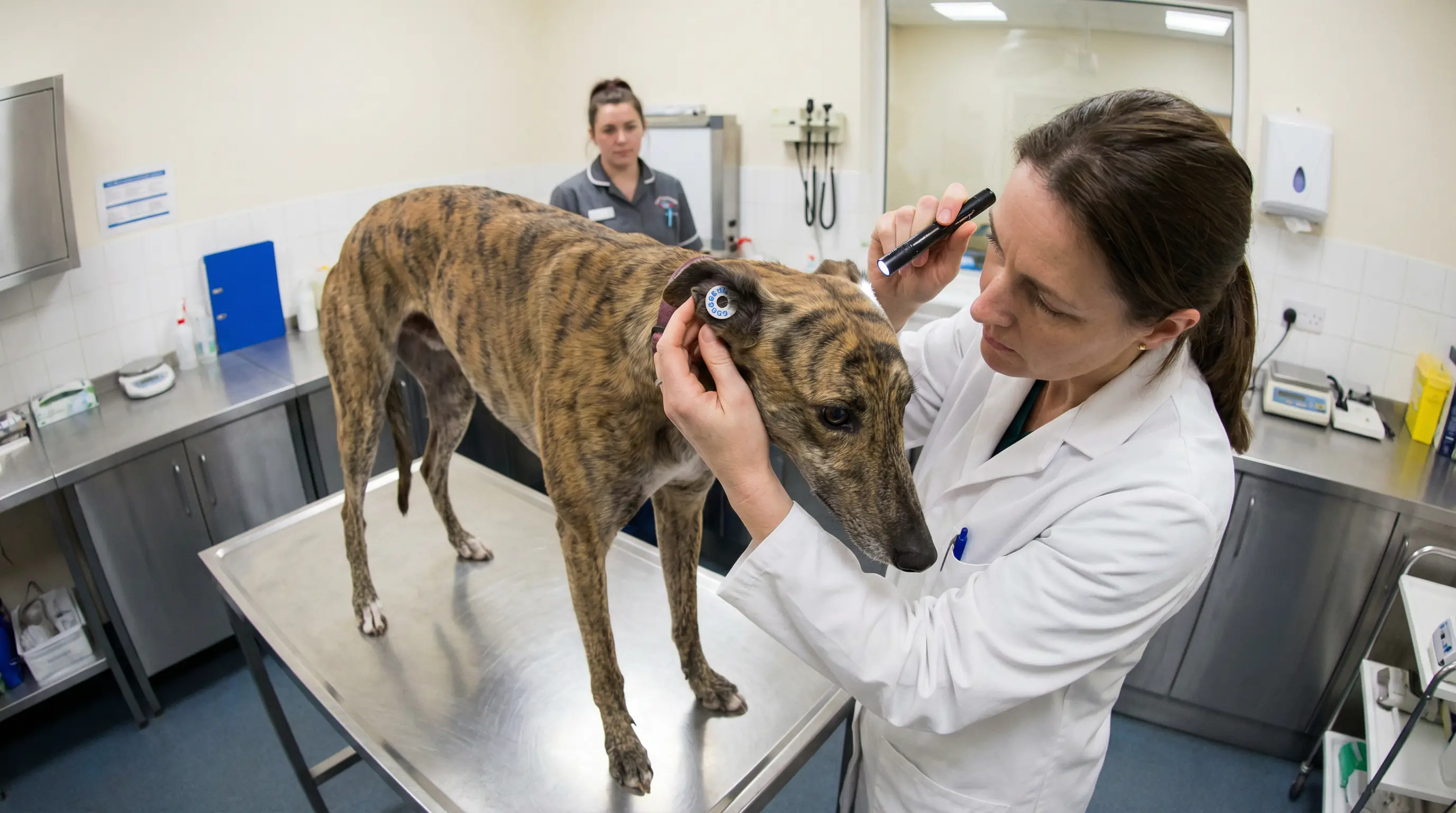
Greyhound welfare is a regulatory priority that has grown significantly in emphasis over the past decade. The GBGB’s welfare standards cover every stage of a racing greyhound’s career: from initial registration and kennelling through active racing to retirement and rehoming. Licensed trainers must provide adequate housing, nutrition, veterinary care and exercise for every dog in their charge, and the GBGB conducts kennel inspections to verify compliance.
At the track level, welfare provisions include mandatory veterinary attendance at every meeting, injury reporting requirements, and protocols for the treatment and retirement of dogs that are injured during racing. Towcester’s facilities include on-site veterinary treatment rooms and kennelling areas that meet GBGB specifications for space, temperature and hygiene.
The retirement and rehoming of racing greyhounds is a particularly important welfare issue. The GBGB operates a rehoming programme and works with independent charities to ensure that dogs leaving the racing industry are found suitable homes. Trainers are required to account for every dog in their care and to report the outcome when a dog leaves their kennel — whether it is rehomed, transferred to another trainer, or retired to a sanctuary. This tracking system is designed to prevent dogs from disappearing without record, a historic concern in the industry that regulation has moved to address.
For bettors, welfare standards may seem peripheral. They are not. A sport that treats its animals well attracts public support, sponsorship and political tolerance. A sport that acquires a reputation for poor welfare attracts scrutiny, regulation and potentially prohibition. The long-term viability of greyhound racing as a betting medium — and by extension the viability of your Derby bets — depends on the industry maintaining welfare standards that justify the public’s licence to operate.
What Regulation Means for Betting Integrity
The regulatory framework that governs UK greyhound racing exists, in part, to protect bettors. Drug testing ensures that the form you analyse is genuine. Integrity monitoring ensures that the market you bet into is not being manipulated. Track licensing ensures that the racing conditions are consistent and fair. Trainer licensing ensures that the people preparing Derby contenders meet professional standards.
None of this makes the Derby predictable — the competition’s format guarantees unpredictability. But it makes the unpredictability genuine. When a 28/1 outsider wins the Derby, you can be confident that it won because it ran faster than the other five dogs, not because the result was arranged. When a favourite loses, you can be confident that it lost because of racing luck, not because it was deliberately held back. That confidence is the foundation on which all form analysis, all staking decisions, and all betting strategy depends.
The UK Gambling Commission provides an additional layer of oversight, regulating the bookmakers through which you place your bets. Licensed operators must adhere to fair trading practices, pay out winning bets promptly, and participate in dispute resolution schemes. This dual regulation — of the sport by the GBGB and of the betting operators by the Gambling Commission — creates a framework in which bettors can participate with reasonable assurance of fairness.
The Rules Protect the Race — And Your Bet
Regulation is invisible when it works. You do not notice the drug test that was conducted, the integrity alert that was investigated and cleared, or the kennel inspection that ensured a Derby contender was housed in proper conditions. But the absence of regulation would be immediately visible — in unreliable form, in suspicious results, and in a betting market that no informed punter would trust.
The GBGB’s framework is not flawless. No regulatory system in any sport is. But it is structured, enforced, and subject to external oversight that gives bettors a justified basis for confidence. When you study the Derby form guide and place your bet, you are engaging with data produced under a regulated system. That data means something. And the fact that it means something — that the form is real, the competition is fair, and the rules are enforced — is the reason that greyhound betting can be approached as an analytical exercise rather than a gamble in the dark.
Stay informed at englishgreyhoundderbyuk.