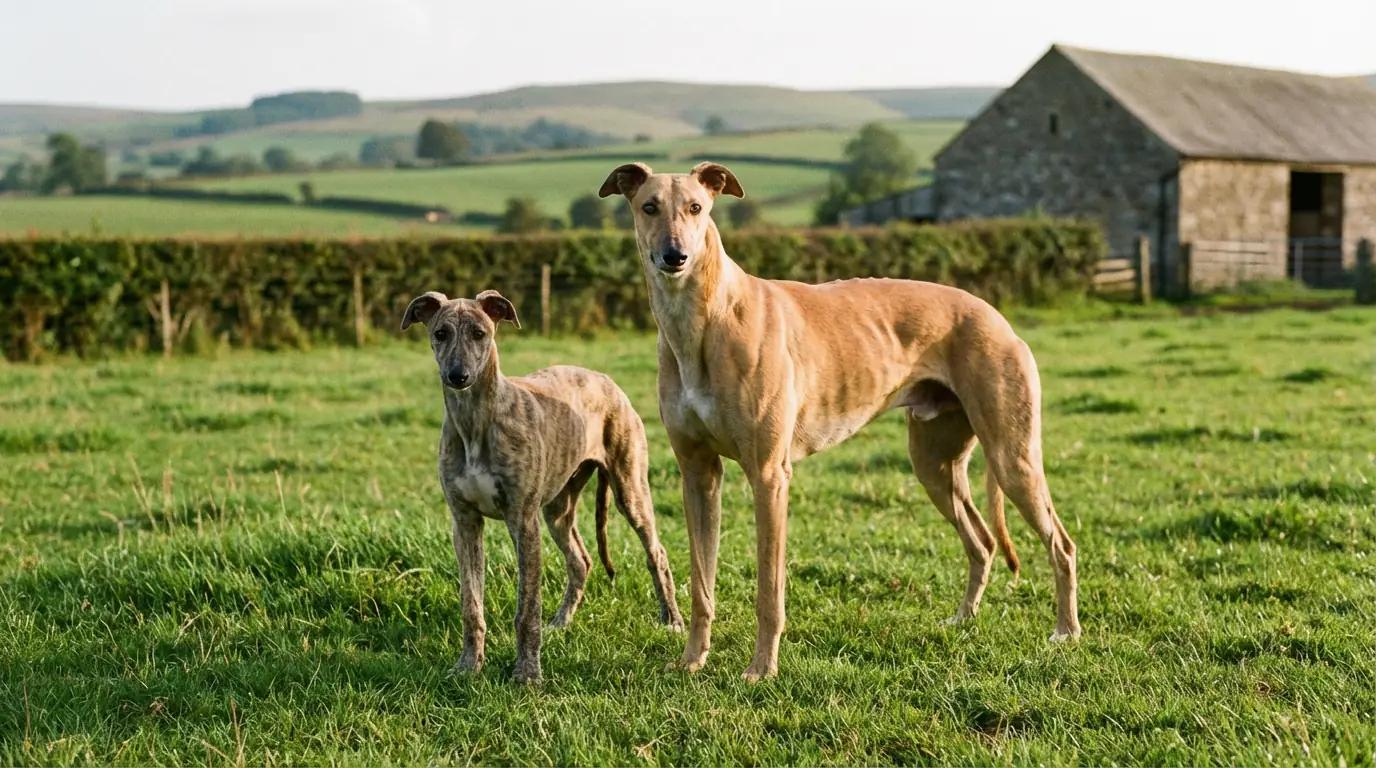
The Race Begins in the Whelping Box
Every greyhound that lines up in the English Greyhound Derby is the product of deliberate breeding decisions made two to three years before the dog ever sets foot on a track. The sire and dam were selected for speed, stamina, temperament, or some combination of the three, and those genetic traits shape the dog’s physical capabilities before training begins. Breeding is not destiny — a brilliantly bred puppy can fail as a racer, and an unfashionable pedigree can produce a champion — but it sets the parameters within which a dog develops.
For bettors, pedigree analysis is a secondary tool. It will never replace form, sectional times, or trap draw assessment as the primary basis for a Derby bet. But in specific situations — when a dog’s racing form is thin, when it is stepping up in class for the first time, or when you are assessing young dogs in the ante-post market months before the competition — breeding data can provide clues that the race form has not yet confirmed.
How Breeding Affects Racing Ability
Greyhound racing ability is polygenic — influenced by many genes working together rather than a single heritable trait. Speed, acceleration, stamina, stride length, cornering agility, temperament under pressure, and recovery rate between races all have genetic components, and all are relevant to Derby performance. No single sire or dam passes on all of these qualities in equal measure, which is why full siblings can have vastly different racing careers.
The physical traits most directly linked to breeding are stride length and muscle fibre composition. Greyhounds from sire lines known for producing long-striding dogs tend to excel on larger, sweeping tracks like Towcester, where the wide bends allow a full stride to be maintained through the turns. Dogs from lines associated with explosive early speed tend to perform better on tighter tracks where the first bend comes quickly and breaking fast is essential.
Temperament is harder to measure but arguably more important at Derby level. A dog that stays calm in the traps, focuses on the hare despite the noise and pressure of a Derby final, and maintains its running line when bumped or crowded is more likely to produce consistent performances across five weeks of competition. These behavioural traits are heritable, and certain bloodlines have reputations for producing calm, focused racers. Trainers who have worked with multiple offspring of the same sire or dam develop a feel for these temperamental tendencies that shapes their Derby selections.
One key distinction: breeding determines a dog’s ceiling — its maximum potential. Training, fitness, experience and luck determine how close it gets to that ceiling in any given race. A superbly bred greyhound that is poorly trained or injured will never reach its potential. A modestly bred greyhound that is expertly managed can outperform its pedigree. Breeding tells you what a dog might be capable of. The form book tells you what it has actually done.
Key Sire Lines in Derby History
Certain sire lines have produced a disproportionate number of Derby runners and winners over the decades. These bloodlines are not guarantees of Derby success, but they represent genetic pools that have consistently generated dogs with the speed, stamina and temperament required for the competition.
The Dorotas sire line, descending through a series of high-quality Irish stud dogs, has produced multiple Derby finalists and winners in the modern era. Dogs from this lineage tend to show strong finishing speed and tactical versatility — qualities that suit Towcester’s wide bends and long run to the line. Liam Dowling’s De Lahdedah, the 2024 champion, was sired by Lenson Bocko — a line with strong Derby pedigree, as Lenson Bocko himself was an Irish Derby winner trained by Graham Holland.
The Droopys bloodline, originally associated with the Droopys prefix kennel, has produced a string of top-class racers including the 2025 winner Droopys Plunge, a son of the prolific sire Droopys Sydney. Dogs from this line are typically characterised by raw pace and a willingness to run on through pressure — they do not give up when challenged, which is an invaluable trait in the closing stages of a Derby final.
Head Bound and Ballymac Eske are sire names that recur in Derby pedigrees across multiple generations. Their influence is now indirect — several generations removed from the current racing population — but the genetic legacy of these foundation sires is visible in the stride patterns and competitive instincts of their descendants. When assessing a young dog’s pedigree, tracing the sire line back two or three generations can reveal connections to established Derby bloodlines that are not obvious from the immediate parentage.
Dam Lines & Stamina Inheritance
While sire lines receive the majority of attention in breeding analysis, the dam’s contribution is equally significant — and in some respects more important for Derby-specific traits. Stamina, in particular, appears to be strongly influenced by the dam line. A dam that raced successfully over 500 metres or longer distances is more likely to produce offspring with the endurance needed for five weeks of consecutive racing.
The logic is partly physiological. Mitochondrial DNA, which plays a key role in cellular energy production and aerobic stamina, is inherited exclusively from the mother. This means a dam’s endurance capacity is passed directly to all her offspring regardless of the sire. A sire may contribute speed and power, but the ability to sustain that speed over repeated races across a knockout competition may depend more heavily on the maternal line.
In practice, identifying strong dam lines requires more research than sire line analysis. Sire records are well publicised — stud dogs are marketed on the basis of their offspring’s racing results, and the data is accessible through breeding databases. Dam records are less visible but equally trackable. Check whether a Derby entrant’s mother, grandmother, or maternal siblings raced successfully over middle distances or in knockout competitions. If the maternal line shows sustained form across multiple races and multiple weeks, the dog is more likely to handle the physical demands of the Derby campaign.
Using Pedigree Data in Form Analysis
Pedigree analysis is most useful in two specific Derby betting contexts. First, when assessing young dogs entering the Derby for the first time. A two-year-old with limited form but a pedigree rich in Derby bloodlines — a sire that produced multiple finalists, a dam with proven stamina — is a stronger ante-post prospect than its thin form line alone would suggest. The breeding data fills in the blanks that the racing record has not yet written.
Second, when comparing two dogs with similar form. If your analysis has narrowed a Derby heat to two likely qualifiers and you cannot separate them on times, sectionals or running style, the pedigree can serve as a tiebreaker. The dog with stronger bloodlines for the specific demands of the Derby — Towcester-compatible stride, demonstrated stamina inheritance, temperamental resilience — has a marginal edge that the form book cannot capture.
Do not overweight pedigree data. Breeding analysis should never override strong form evidence. A dog with modest bloodlines but outstanding race form at Towcester is a better Derby bet than a superbly bred dog that has never broken 29.00. Pedigree tells you about potential. Form tells you about performance. When both point in the same direction, your confidence in the selection should increase. When they conflict, trust the form.
Blood Runs Fast — But Not Always Predictably
Breeding is the oldest science in greyhound racing and still the least precise. Trainers have been selecting for speed, stamina and temperament for over a century, and the modern racing greyhound is an extraordinary athlete as a result. But the gap between genetic potential and racing outcome is filled with variables — injury, training, track conditions, trap draws, and the simple unpredictability of six dogs sprinting around two bends in thirty seconds.
What breeding gives you is context. A dog with Derby blood is not guaranteed to win the Derby, but it comes from a gene pool that has produced Derby winners. That context matters when the form is thin, when the dog is young, or when you are looking for the one additional signal that separates a good bet from a marginal one. The blood runs fast. Whether it runs fast enough on the night depends on everything else.