The Ladder Every Dog Climbs
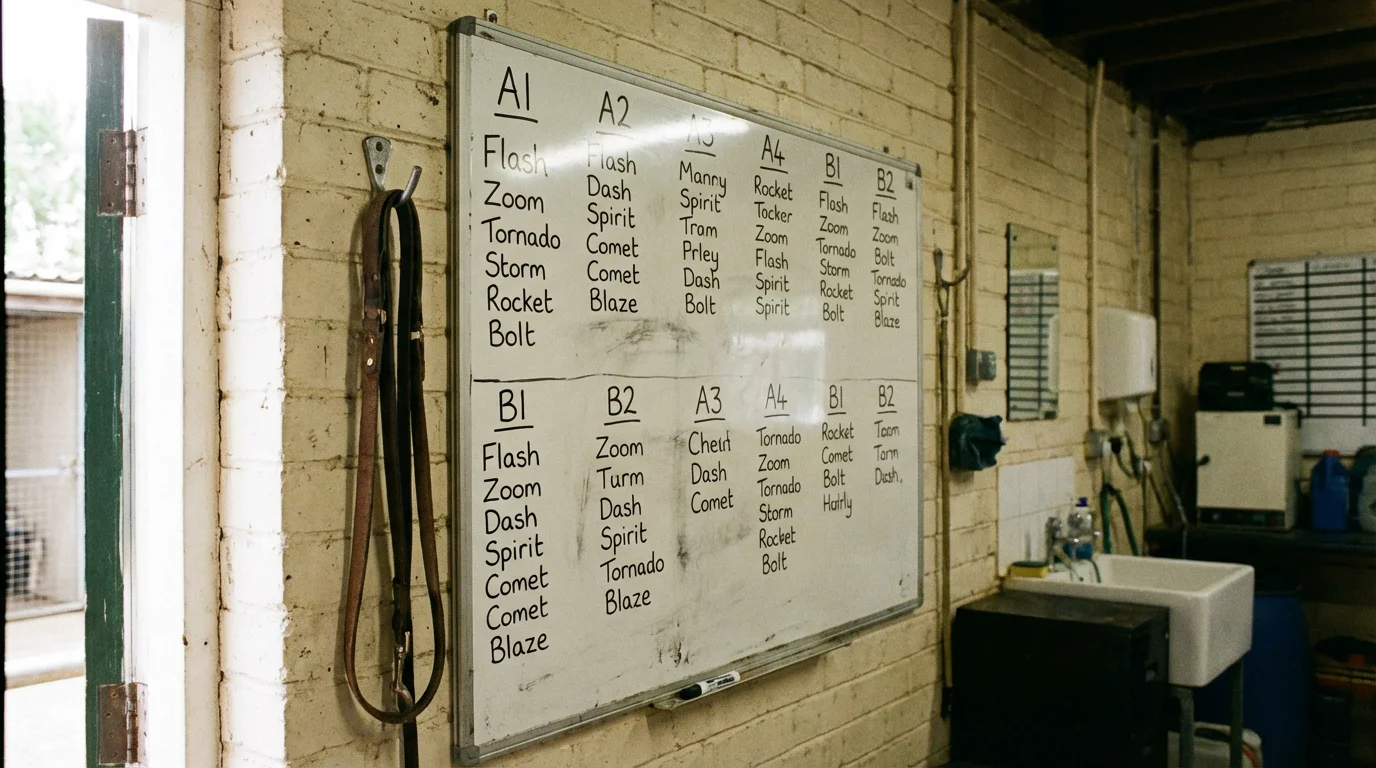
The grading system is the structural backbone of UK greyhound racing. Every dog licensed to race at a GBGB track is assigned a grade that reflects its recent form and ability, and that grade determines which races it can enter. The system exists to produce competitive, evenly matched fields at every meeting — and for bettors, it is a framework for understanding how good a dog actually is, how quickly it is improving, and how its current level of competition relates to the demands of an event like the English Greyhound Derby.
Grades are not static. Dogs move up when they win and down when they lose, creating a constantly shifting picture that is far more dynamic than the equivalent handicapping systems in horse racing. Understanding how this movement works — and what it signals about a dog’s trajectory — is a genuine edge in Derby betting, where the field includes dogs from multiple tracks and multiple grade levels all converging on one open-class competition.
GBGB Grade Structure
The Greyhound Board of Great Britain oversees the grading system across all licensed tracks in England, Scotland and Wales. (GBGB – Greyhound Board of Great Britain) The core grades run from A1 at the top through A2, A3, A4, A5 and beyond, with the exact number of grades varying slightly by track based on the volume of dogs racing there. A1 is the highest standard of graded competition, populated by dogs with strong recent form who are winning or placing consistently. The lower grades accommodate dogs that are either newer to racing, returning from injury, or performing below the standard of the top tiers.
Within each grade, dogs are further differentiated by their calculated time — a standardised time adjustment that accounts for different track distances and conditions. This calculated time is the primary mechanism by which the grading system places dogs: faster calculated times push a dog up, slower times pull it down. The racing manager at each track uses calculated times alongside recent finishing positions to assign grades for each meeting.
Alongside the graded system sit open races, which exist outside and above the grade structure. Open races are the elite level of British greyhound racing — they carry no grade restriction, attract the best dogs from any track, and typically offer the largest prize money. The English Greyhound Derby is an open race. So is the St Leger, the Oaks, the Grand Prix, and a calendar of other classic events. A dog competing in open races is operating at a level where grading is irrelevant; it is being measured against the best available opposition regardless of its home grade.
For Derby bettors, the distinction between graded and open-class form is essential. A dog that has been racing exclusively in A3 or A4 company at a regional track is making a substantial leap in class when it enters the Derby. A dog already competing in A1 or open races is stepping up by a smaller margin. And a dog with proven open-race form — wins or places against unrestricted fields — has already demonstrated that it belongs at Derby level, even if its home-track grade seems unremarkable.
How Dogs Move Between Grades
Grade movement is governed by a combination of finishing position and calculated time. The general principle is simple: win, and you go up; lose repeatedly, and you come down. But the specifics vary. A dog that wins by a large margin and posts a fast time may jump two grades in a single reassessment. A dog that finishes second repeatedly in strong company may hold its grade despite not winning, because its times indicate that it is competitive at its current level.
The timing of grade changes matters for Derby assessment. Dogs are typically regraded after each meeting, and the new grade takes effect for their next race. This means a dog can be rising through the grades rapidly in the weeks before the Derby entry deadline — winning at A3, being upgraded to A2, winning again and moving to A1. That upward trajectory is a strong signal, particularly if the calculated times are improving alongside the finishing positions. A dog moving in the opposite direction — dropping from A1 to A2, or from A2 to A3 — may be in decline, injured, or past its peak.
Irish-trained dogs entering the English Derby present a complication, because the Irish grading system operates under Rásaíocht Con Éireann (the Irish Greyhound Board) and uses different conventions. Irish grades are not directly equivalent to GBGB grades, so a straight comparison between an Irish A1 dog and a British A1 dog is unreliable. The best way to assess Irish dogs entering the Derby is through their open-race form and Towcester trial times rather than their home grade.
Open Race Class & Derby Relevance
Open races are the proving ground for Derby contenders. A dog that has won or placed in open-race competition at tracks like Towcester, Nottingham, Romford, or Shelbourne Park has already been tested against unrestricted fields and has demonstrated the quality required to compete at the highest level. This form carries more weight in Derby assessment than any number of graded wins at regional tracks.
The key open races to monitor in the lead-up to the Derby include the Select Stakes at Nottingham, the Easter Cup at Shelbourne Park, the Puppy Derby and the various invitation opens that run at major tracks through the spring. Dogs that perform well in these events — particularly those that do so at Towcester — are flagging themselves as Derby-calibre runners. Their prices in the ante-post market may not yet reflect their open-race credentials, especially if they come from smaller kennels or less fashionable tracks.
One pattern that recurs in Derby results is the “grade jumper” — a dog that has risen rapidly through the grades in the weeks before the competition and enters the Derby on a run of improving form. These dogs are often underpriced because their grading history looks thin compared to established open-class runners. But the trajectory of their improvement suggests they may not yet have reached their ceiling. Identifying grade jumpers in the ante-post market, before their form becomes widely known, is one of the most reliable sources of value in Derby betting.
Grade Jumps as Betting Signals
The speed and pattern of a dog’s grade movement tells you something that the raw form figures alone cannot. A dog that has moved from A4 to A1 in the space of six weeks is improving at a rate that suggests its true ability has not yet been measured. Its form figures may show a string of wins, but those wins were against opponents of progressively higher quality — each one confirming that the dog has more to give.
Conversely, a dog that has been stuck at A1 for months — racing consistently but not winning — may have reached its level. It is competitive at that grade but does not have the quality to step above it. In the Derby, where the competition is at open-race level, that dog may be a step short. Its grading history says it is good. It does not say it is good enough.
For practical Derby betting, use grade movement as a filter. Dogs on an upward trajectory — rising through grades, posting improving times, and beating better opposition with each run — deserve more attention than dogs whose grades have been stable or declining. This does not override form analysis or sectional data, but it adds a directional signal that the market sometimes underweights. A dog whose grade has climbed two levels in the month before the Derby is a dog whose ability is still being discovered. And in betting, undiscovered ability is where the price advantage lives.
Grade Is a Starting Point, Not a Verdict
The grading system is an administrative tool designed to produce fair racing. It was not built for betting analysis, and treating it as a definitive measure of quality is a mistake. Two dogs can hold the same grade and be separated by a gulf in actual ability, because the system measures recent results rather than peak potential. A dog returning from injury may be graded at A3 despite having run at open-race level six months earlier. A dog that has been carefully campaigned — held back in lower grades to avoid tough opposition before a tilt at the Derby — may appear less accomplished than it truly is.
Use grades as context, not conclusion. They tell you the competitive level a dog has been operating at, and they indicate whether it is moving up or down. That information feeds into your wider assessment alongside times, sectionals, trap performance, running style and trainer profile. The Derby field brings together dogs from different tracks, different grades and different countries. The grading system gives you a common reference point for comparing them, but only if you understand its limitations as clearly as its strengths.